When most people think about the Underground Railroad, visions of black families trekking nervously through the forest under the cover of darkness invariably come to mind.
An elaborate system of safe houses in the late 1700s and 1800s where escaped slaves found sanctuary on the road to freedom, the Underground Railroad stretched from the Southern plantations northward into U.S. free states and Canada.
Few people, however, are aware of the southern route into Florida.
Between 1738 and 1821 (when Florida became a U.S. territory), a fort located two miles north of the city of St. Augustine provided a haven for slaves escaping from plantations in Georgia and the Carolinas. Originally known as Garcia Real de Santa Teresa de Mose, Fort Mose (pronounced MOH-say) was established by the Spanish governor of Florida at the time, Manuel de Montiano.
Montiano established Fort Mose as a free black settlement to cripple the colonial plantation system and to provide a first line of defense for Florida (which was basically St. Augustine at the time) against attack from the north.
In exchange for their freedom, the slaves were required to agree to three conditions: 1) They had to accept the Catholic religion, 2) They had to swear allegiance to the Spanish King, and 3) They had to join the Spanish militia.
Though none of the wooden structures remain, the original site of the 18th-century fort was uncovered in a 1986 archeological dig. Today, the 24-acre site is a protected Florida State Park.

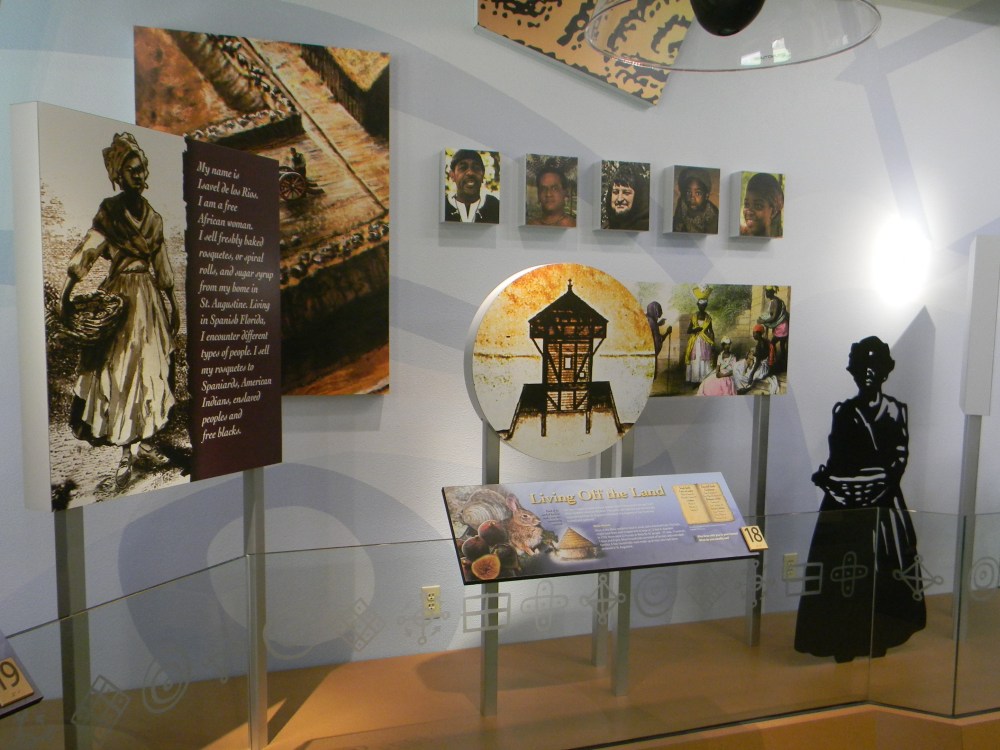
A visit to Fort Mose conjures images of life in the settlement through on-site exhibits, a visitor’s center and a museum. In addition to year-round access to the exhibits and museum, the Florida Humanities Council and the Florida State Park Service sponsor living history demonstrations throughout the year.
The first Saturday of the month, the park hosts Fort Mose Militia Muster and Training from 9 a.m. to 1 p.m. The muster provides an opportunity for the militia (re-enactors) to practice firing drills and to teach new members about the historic weapons’ use and safety. The pubic is welcome to watch the demonstrations. In addition, young spectators can participate in a children’s militia, which includes wooden toy muskets and uniform accessories.
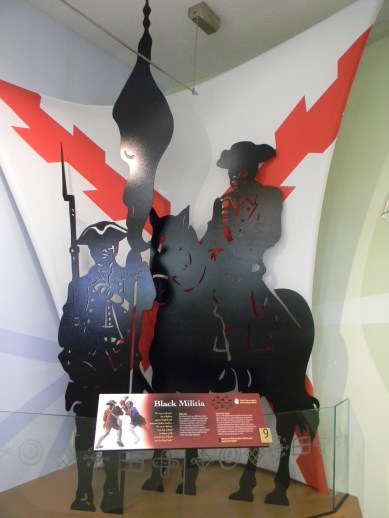
Every year in June, living history actors perform the “Bloody Battle of Fort Mose,” a re-enactment of the 1740 Spanish victory over the British. The day is filled with musket demonstrations and colonial Florida craft-making stations, including blacksmithing, 18th-century foods, finger weaving and pine needle basket weaving.
In February, a “Flight to Freedom” demonstration includes stories of the African men and women who took the First Underground Railroad to Fort Mose. During the event, visitors can take a guided tour of the Freedom trail, hear the roar of the 18th-century flintlock muskets and cannons and visit the interactive museum to learn about the people who inhabited the fort.
The fort’s visitor center and museum are open 9 a.m. to 5 p.m. Thursday through Monday. Admission is $2. Children 5 and under are free.
For information, all 904-823-2232 or go to floridastateparks.org/FortMose.

 Florida Faces and Places